
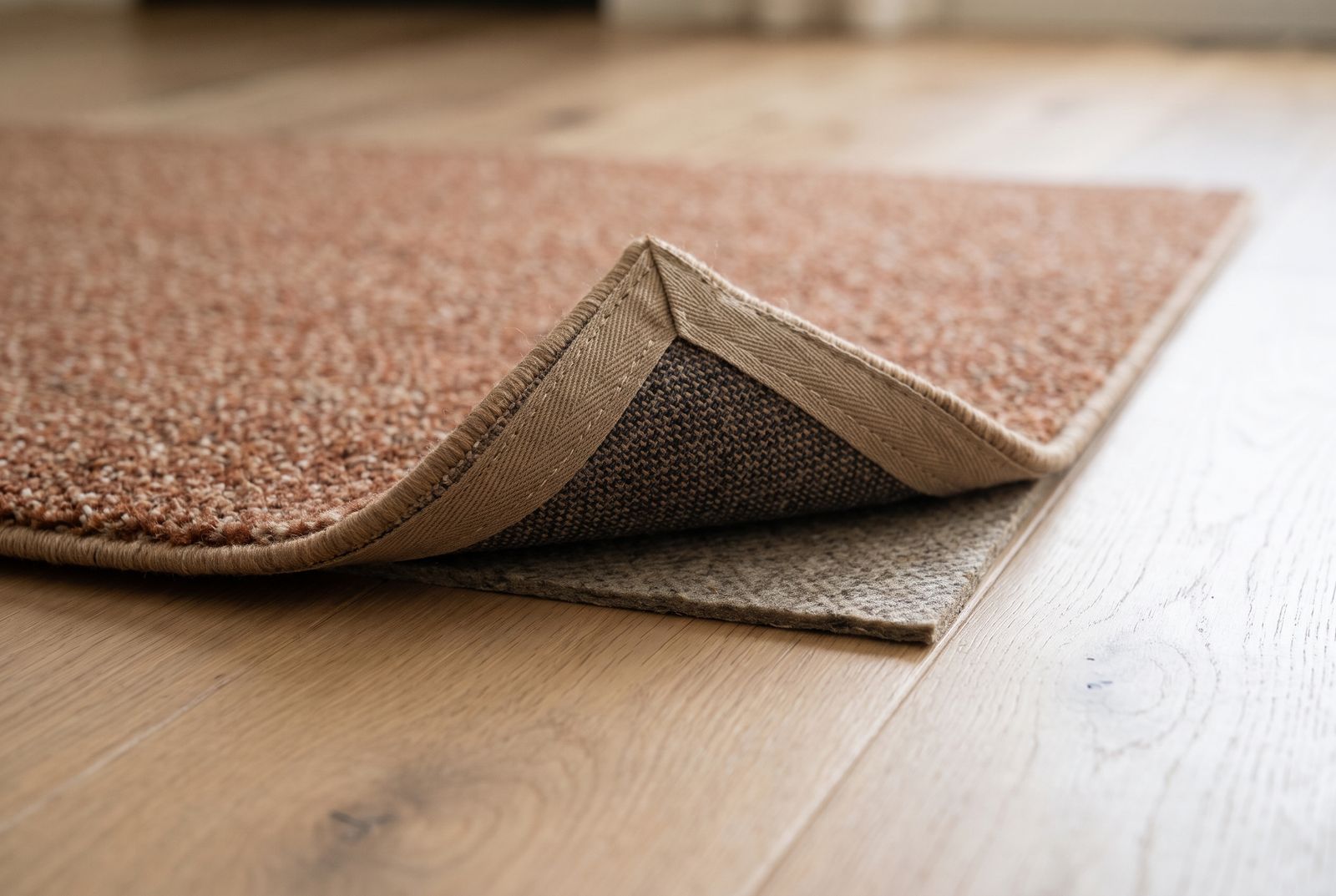
What remnants are good for
Every roll of carpet ends with a piece too small for the next whole-room order. Those end pieces are remnants. They are the same carpet as the full roll, just in an awkward size, which is why they are often priced below the roll price and why they are worth knowing about.
Remnants work best where you need a modest area of carpet and do not need it to match anything else:
- A small room on its own. A walk-in closet, a small bedroom, or a bonus room with a doorway transition can often be covered from one remnant with no seam.
- A custom area rug. Cut to the exact size your room needs, then bound or serged. This is often the most practical way to get a large, plain, dense rug in an odd size.
- Runners and mats. Hallways, the strip beside a bed, or a mudroom mat, cut long and narrow.
- Patch stock. If the remnant is from your own install, keep it. Nothing else will match for repairs.
Measure the space first, then bring the numbers. Check the remnant for its pile direction, any damage at the cut ends, and whether it is long enough to cover the room in a single direction. A remnant that needs a seam often loses its price advantage.
Binding, serging and fringe
A cut carpet edge will fray and shed if it is left raw. Finishing the edge turns a piece of carpet into a rug.
| Edge | What it is | Looks | Good for |
|---|---|---|---|
| Binding | Fabric tape wrapped over the edge and sewn or glued | Flat, tailored border in a matching or contrast color | Most cut and loop pile; clean modern rooms |
| Serging | Yarn stitched tightly over the edge | Like a store-bought rug edge | Plush and textured carpet where a hand-finished look suits |
| Wide border | A broad band of fabric or leather sewn around the edge | Framed, deliberate, more formal | Larger rugs in living and dining rooms |
| Fringe | Fringe sewn onto the ends | Traditional | Low traffic spots; fringe can catch in vacuums |
Very thick or very dense carpet can be hard to bind neatly at the corners. Ask to see a sample corner on a similar carpet. Rounded corners are often easier to finish cleanly than square ones on heavy pile.
Rug size helper
Enter the room size and how much bare floor you want showing around the edges. It returns the largest rug that fits, as a standard size and as a custom cut.
Enter the room size
Sizing rules by room
The helper gives the maximum. The right size depends on furniture, and a rug that is too small is the most common mistake: it floats in the middle of the room and makes the space look smaller.
Living rooms
Aim for a rug large enough that at least the front legs of the sofa and chairs sit on it. That ties the seating group together. If the room allows, all four legs of every piece on the rug looks even more settled. Leave a border of bare floor between the rug and the walls; somewhere between 12 and 24 inches is typical.
Dining rooms
Chairs need to stay on the rug when pulled out. Measure the table, then add about two feet on every side. A rug that catches chair legs halfway is a trip hazard and wears unevenly.
Bedrooms
Place the rug under the lower two thirds of the bed so it extends out on both sides and at the foot, where feet land. Runners along each side of the bed are an alternative in narrow rooms, and remnants cut into runners are an economical way to do it.
Hallways
Leave a few inches of floor on each side of a runner, and stop it short of doors so they can swing freely. For long halls, one long runner usually looks better than several short ones.
A rug that is too big is rarely a problem. A rug that is too small almost always is.
Rug pads on hard floors
On a hard floor, a rug without a pad slides, bunches and wears from underneath. A pad grips the floor, adds cushion, and lets air move between rug and floor. Choose by the floor below:
- If the floor is vinyl plank or sheet vinyluse a pad the flooring maker approves; some rubber backings can stain vinyl.
- If the floor is site-finished or prefinished woodfelt or felt and natural rubber pads are a common choice.
- If the rug is thin and slides on tilea thin grip pad, trimmed an inch inside the rug edge.
- If the rug sits on carpetuse a pad made for rug-on-carpet so it does not creep.
Trim pads slightly smaller than the rug so the edge of the rug tapers down to the floor and nobody catches a toe. Lift and vacuum under rugs now and then; grit trapped underneath scratches finishes the same way it would on bare floor.
If you are changing floors and want to know whether your old carpet could become a rug, the honest answer is usually no: carpet that has worn out of a room is worn out as a rug too. Better to start from a remnant. Where the old carpet goes instead is covered in the removal and disposal guide.
Questions about remnants and rugs
What is a carpet remnant?
A remnant is a piece left at the end of a roll after larger orders are cut. Because the piece is too small for most whole rooms, remnants are often sold for less than the same carpet off a full roll. They suit closets, small bedrooms, and bound area rugs.
What is the difference between binding and serging?
Binding wraps the cut edge in a fabric tape that is sewn or glued on, giving a flat, tailored border. Serging wraps the edge with yarn stitched tightly over it, which looks more like a traditional rug edge and can be matched to the carpet color. Both stop the cut edge from fraying.
Will a rug pad damage my vinyl or wood floor?
Some can. Certain rubber or latex backings can discolor vinyl flooring, and some flooring makers specifically warn about them. Check your floor maker's care instructions and choose a pad they approve, often felt or a pad labeled safe for your floor type.
Should I keep leftover carpet after an install?
Yes, if there is a usable piece. A remnant from your own roll is the best patch material you will ever find, because it matches the dye lot. Roll it face in, label it with the room, and store it somewhere dry.