
Atlanta carpet and flooring swaps
Atlanta Flooring Store
Pull up the old floor. Put down the right one.
The Carpet Exchange is based in Atlanta, Georgia, and this site is a working guide to replacing carpet: when it has truly worn out, what should go down in each room instead, how to measure, where the old carpet goes, and how to get the house ready. When you know what you want, send the project over for a quote.
One room, two floors
The Exchange, Side by Side
Drag the handle across the bedroom. On the left, worn wall-to-wall carpet; on the right, the same room with light oak vinyl plank. Most replacements come down to that one decision, made room by room.
- DecideReplace or keep, and with what
- PlanMeasure, size rugs, use remnants
- DoTear out, haul away, prep
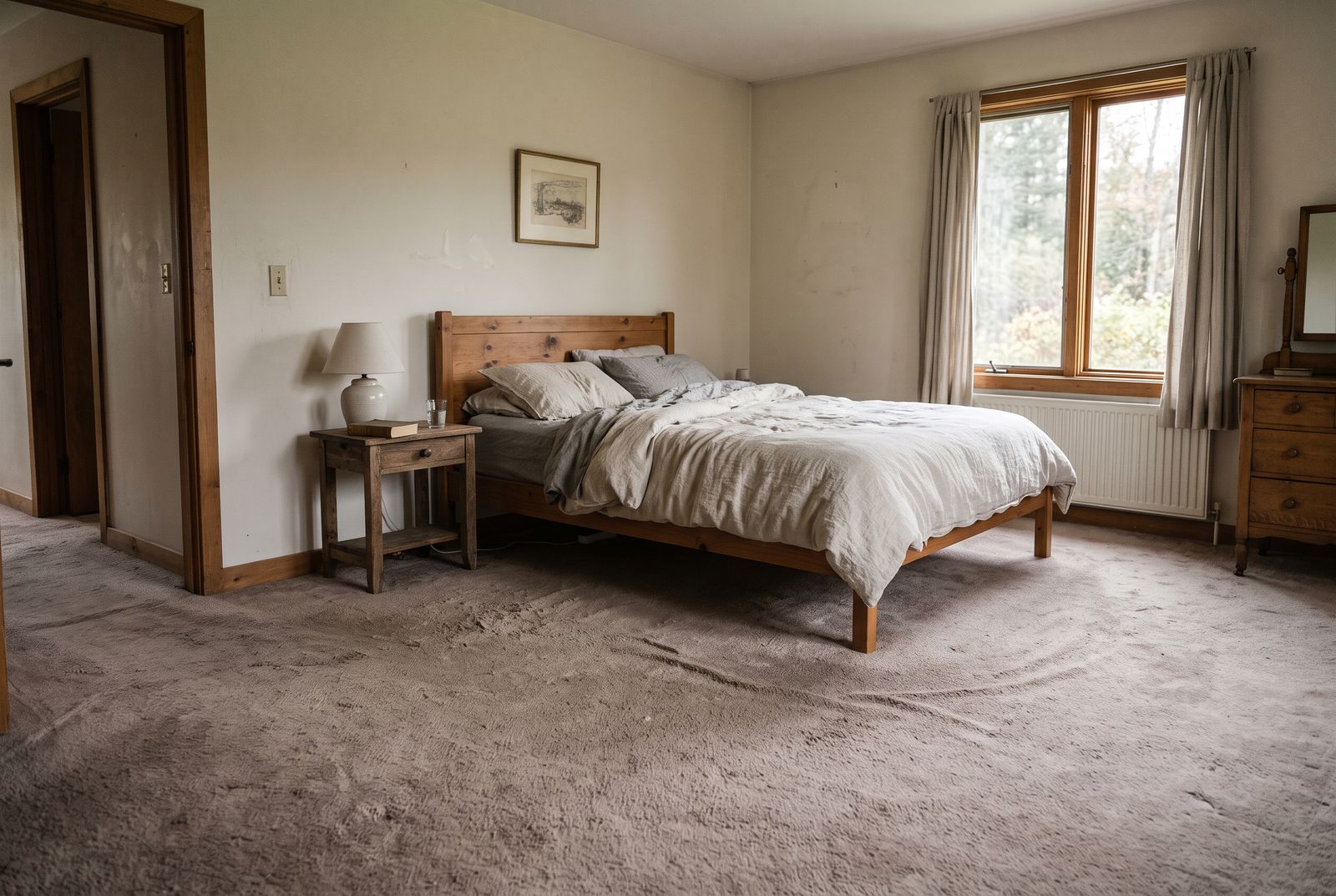
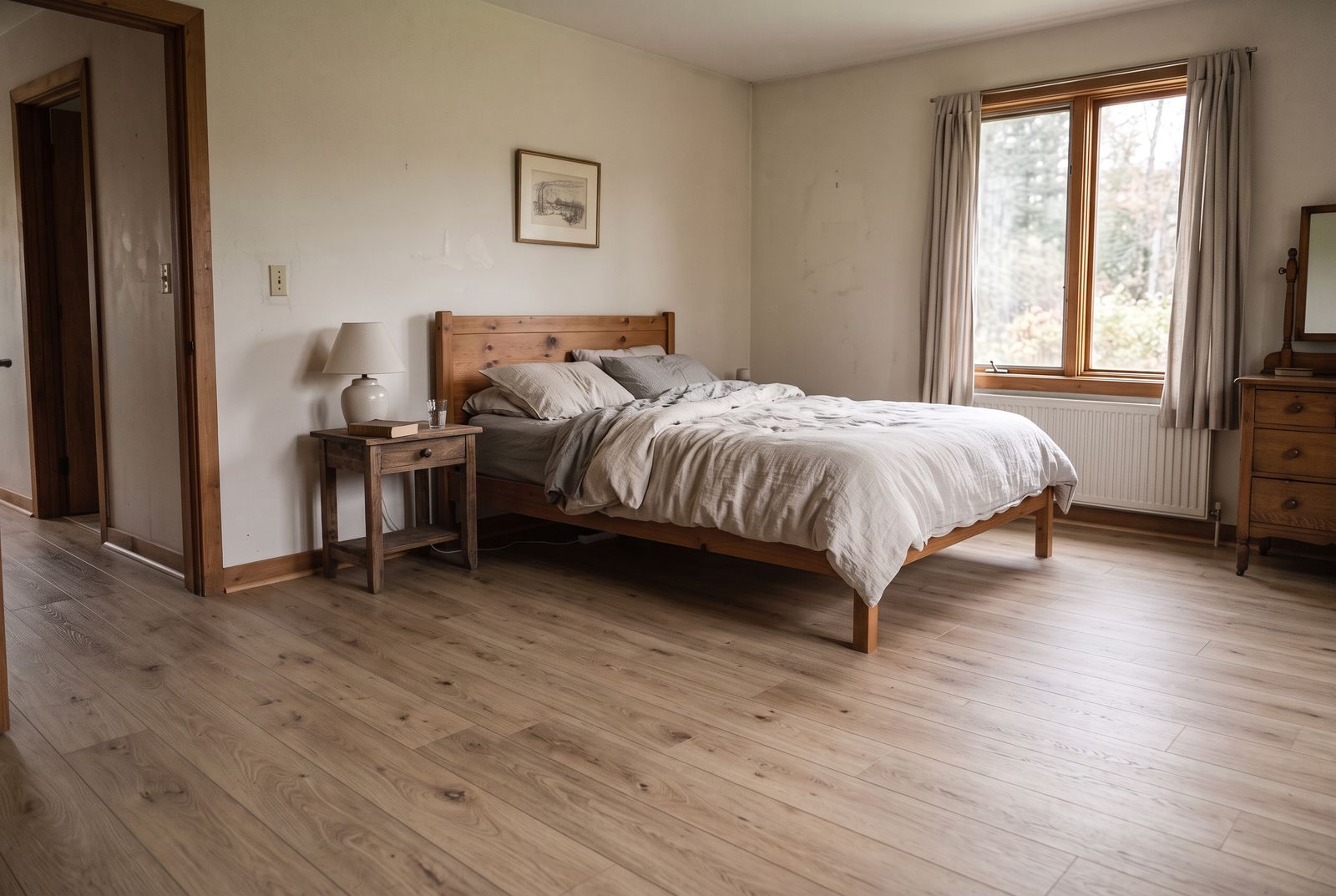
Three stages of a flooring swap: decide, replace or keep and with what; plan, measure, size rugs and use remnants; do, tear out, haul away and prep.
Room by room
Tap a Room, See Its Floor
The right floor is a room-level decision, not a whole-house one. Each bar is a relative fit for that room, weighing moisture, wear, comfort and noise.
Flooring in Atlanta, Georgia
What Atlanta Does to a Floor
A carpet or plank that behaves well in a dry climate can act differently through a Georgia summer. Four local conditions shape most flooring decisions around Atlanta.
-
01
Long, humid summers
Atlanta has a humid subtropical climate: hot, muggy summers and mild, damp winters. Wood floors take on moisture and swell as indoor humidity climbs, then shrink when the heat runs in winter, which is why seasonal gaps and cupping show up in hardwood. A carpet pad that stays damp can hold odor. Keeping the air conditioning running and indoor humidity steady protects every floor; vinyl plank is the least bothered by the swing.
Floors for a humid climate -
02
Red clay at the door
Georgia's red clay gets its color from iron oxides, and the fine dust it leaves on shoes and paws stains light carpet and is hard to lift once it is ground into the pile. Back doors to the yard, garage entries and mudrooms do better with tile or vinyl plank and a washable mat, so carpet starts a few steps further in. Mid-tone and multi-tone carpet hides it far better than pale beige.
Clay stains and worn lanes -
03
Slabs, crawlspaces and basements
Metro Atlanta houses sit on a mix of slab-on-grade foundations, vented crawlspaces and, on sloped lots, full or walk-out basements, which are especially common in North Georgia. Slabs and basements need a moisture test before any new floor goes down. Over a crawlspace, check for a ground vapor barrier and a dry, well-vented or sealed space before installing hardwood.
Slab and basement floors -
04
Spring pollen season
Every spring, usually from March into April, pine and oak pollen coats cars, porches and anything near an open window in a yellow-green film. Carpet holds pollen down in the pile until a vacuum pulls it out; hard floors leave it on top, easy to wipe but easy to stir up. If allergies drive the decision, a HEPA vacuum, walk-off mats and closed windows on high-count days matter as much as the floor itself.
Dust and air on install day
Georgia is carpet country, too: Dalton, in northwest Georgia, is widely known as the Carpet Capital of the World. That history does not change how a floor should be chosen for your rooms, but it does mean carpet is a familiar product across the state.
Houses differ across the metro even where the weather does not. See the metro Atlanta flooring guides by area for intown bungalows, high-rise condos, mid-century ranches, split-foyers, slab homes and lake houses.
The guides
Six Guides, in Order
Most regrets in a flooring swap come from doing these steps out of order: buying before measuring, scheduling before deciding what happens to the old carpet, or finding the subfloor problem on install day. Point at a guide, or tap it on a phone, to open it.
-
01 · Decide
When to replace carpet
Signs that cleaning will not fix it, and when a repair still makes sense.
Read the guide -
02 · Decide
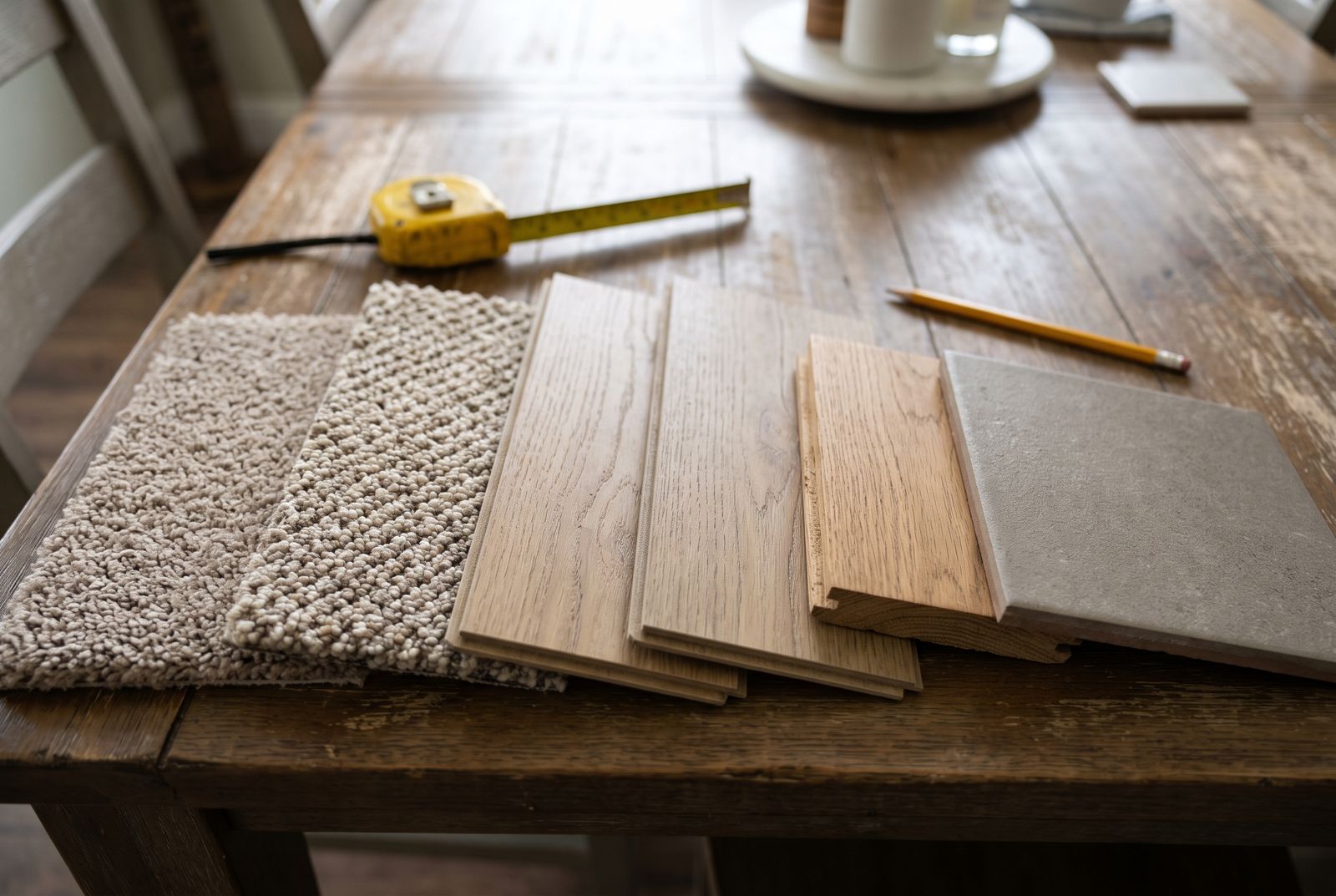
Carpet vs. LVP, hardwood and tile
Room by room trade-offs: comfort, moisture, noise, upkeep and resale.
Read the guide -
03 · Plan
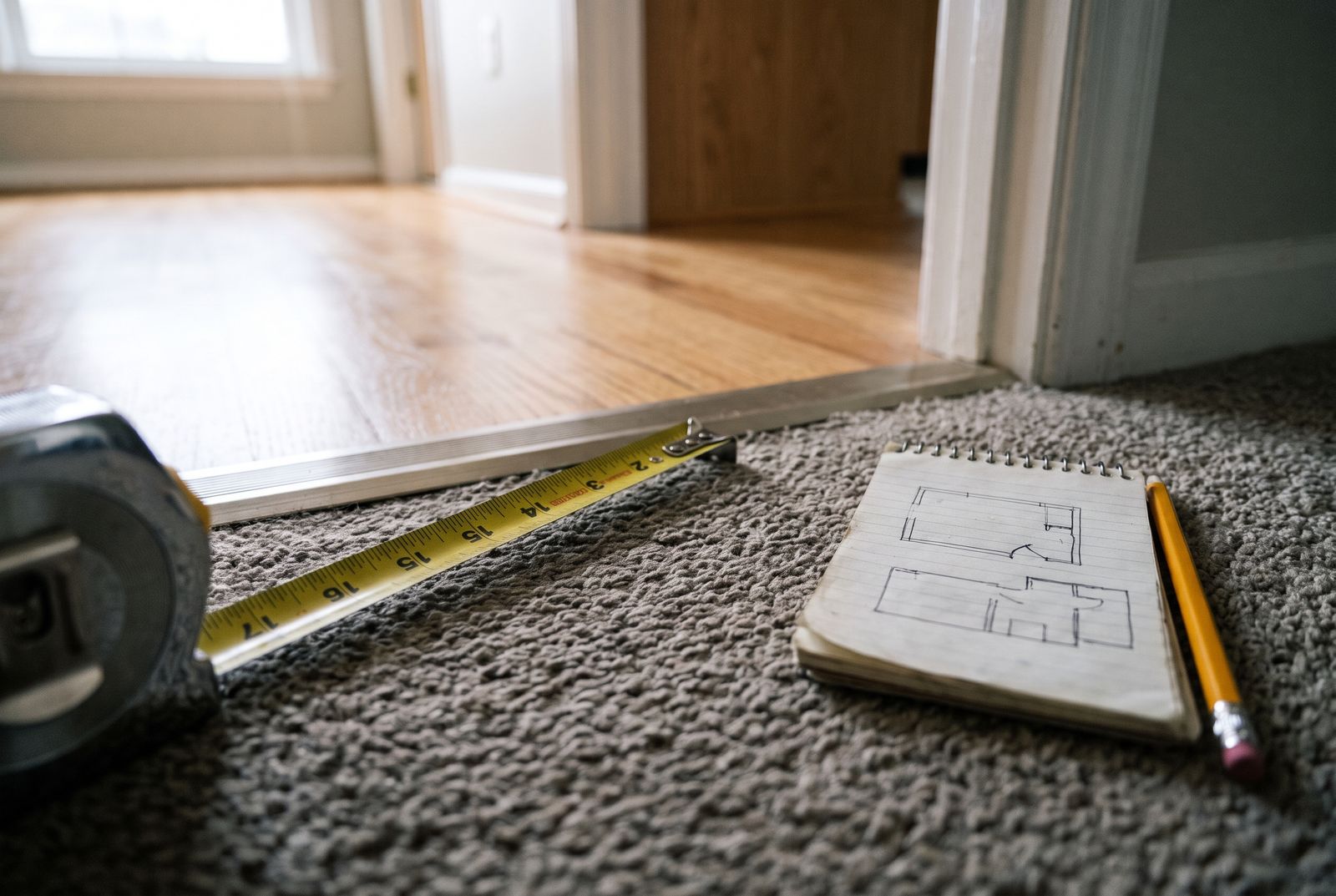
Measuring for new flooring
Square feet vs. square yards, roll widths, seams and waste.
Read the guide -
04 · Plan
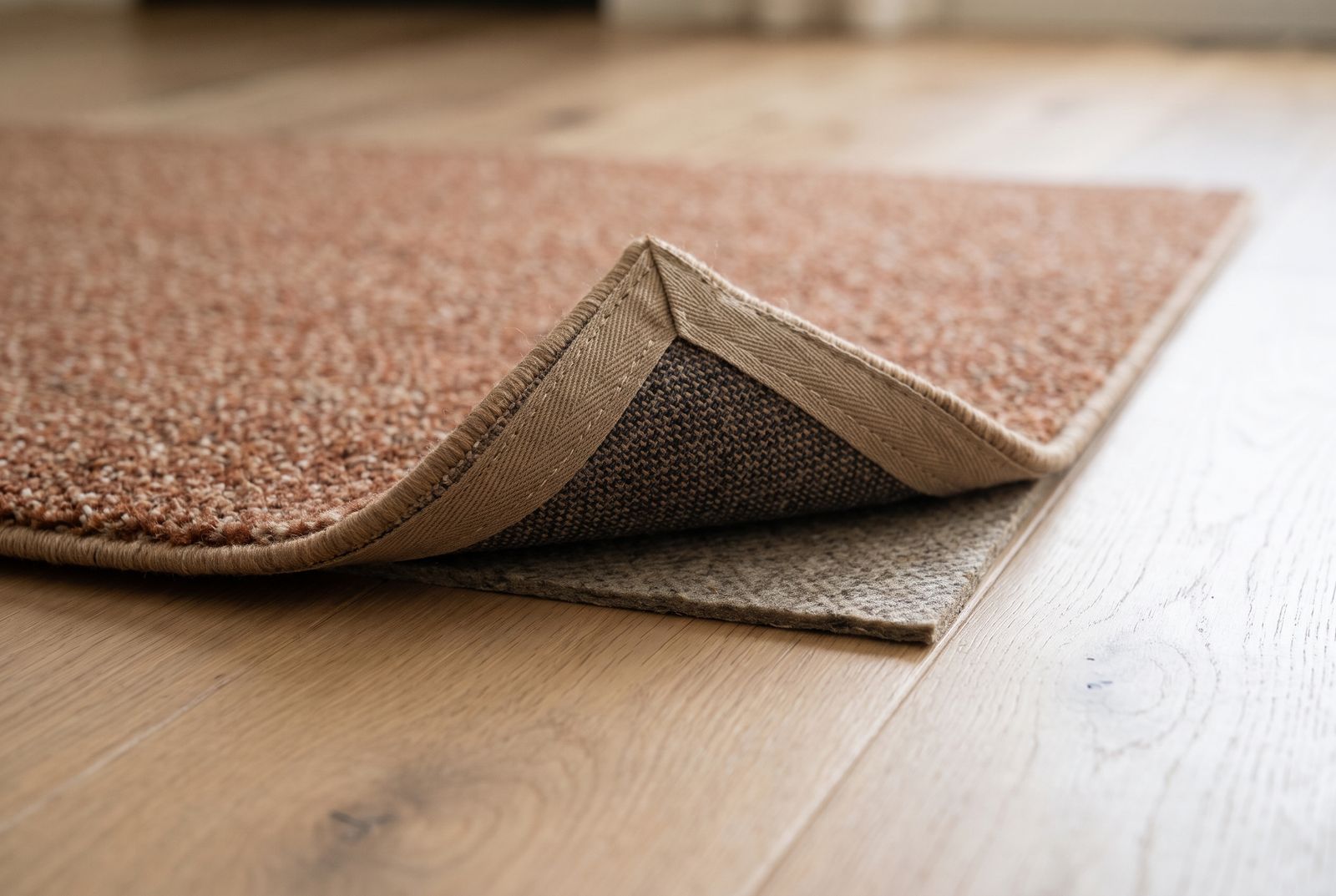
Remnants and area rugs
Turning remnants into bound rugs and sizing rugs over hard floors.
Read the guide -
05 · Do
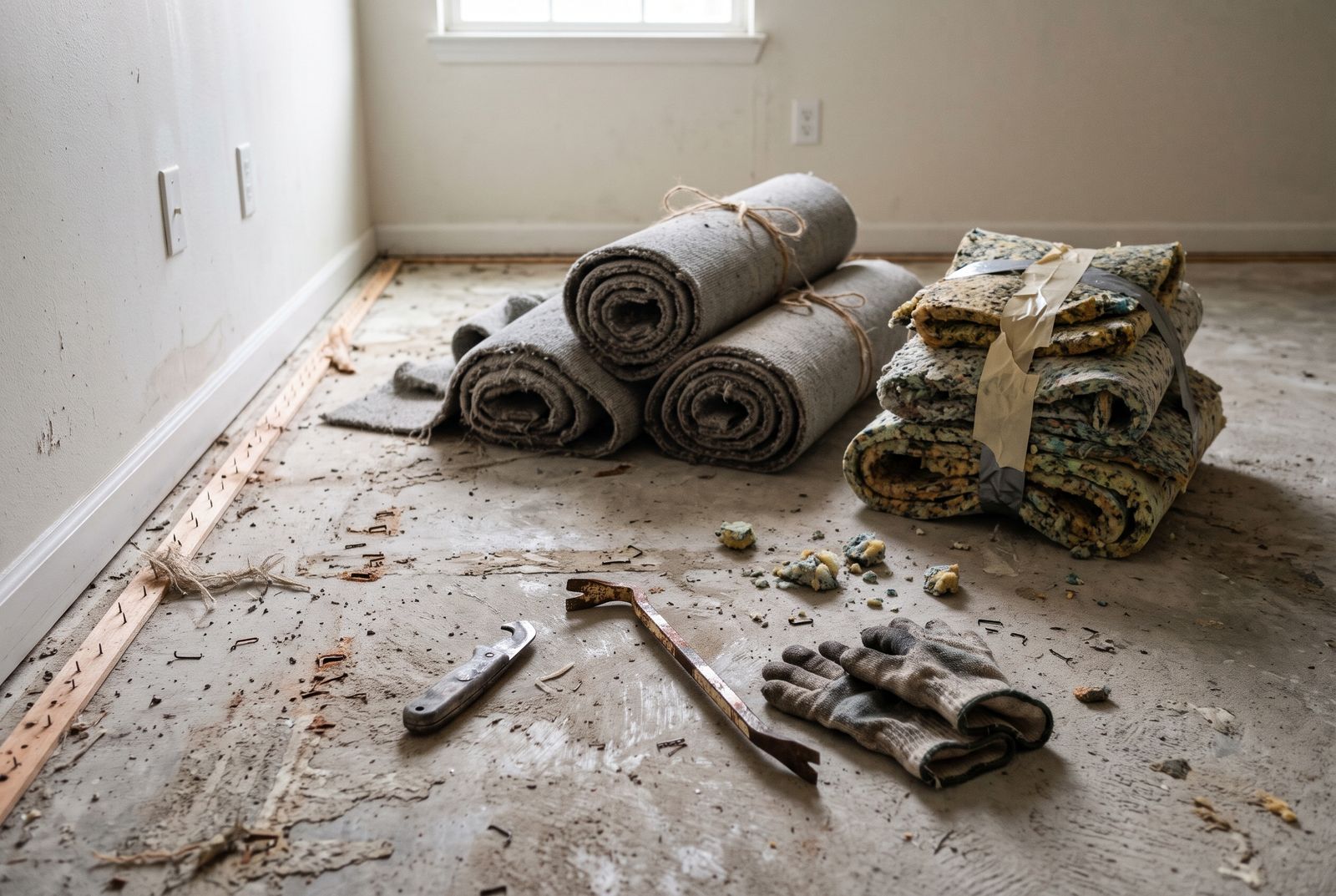
Old carpet removal and disposal
Tear-out, tack strip, pad, and where old carpet can go besides a landfill.
Read the guide -
06 · Do
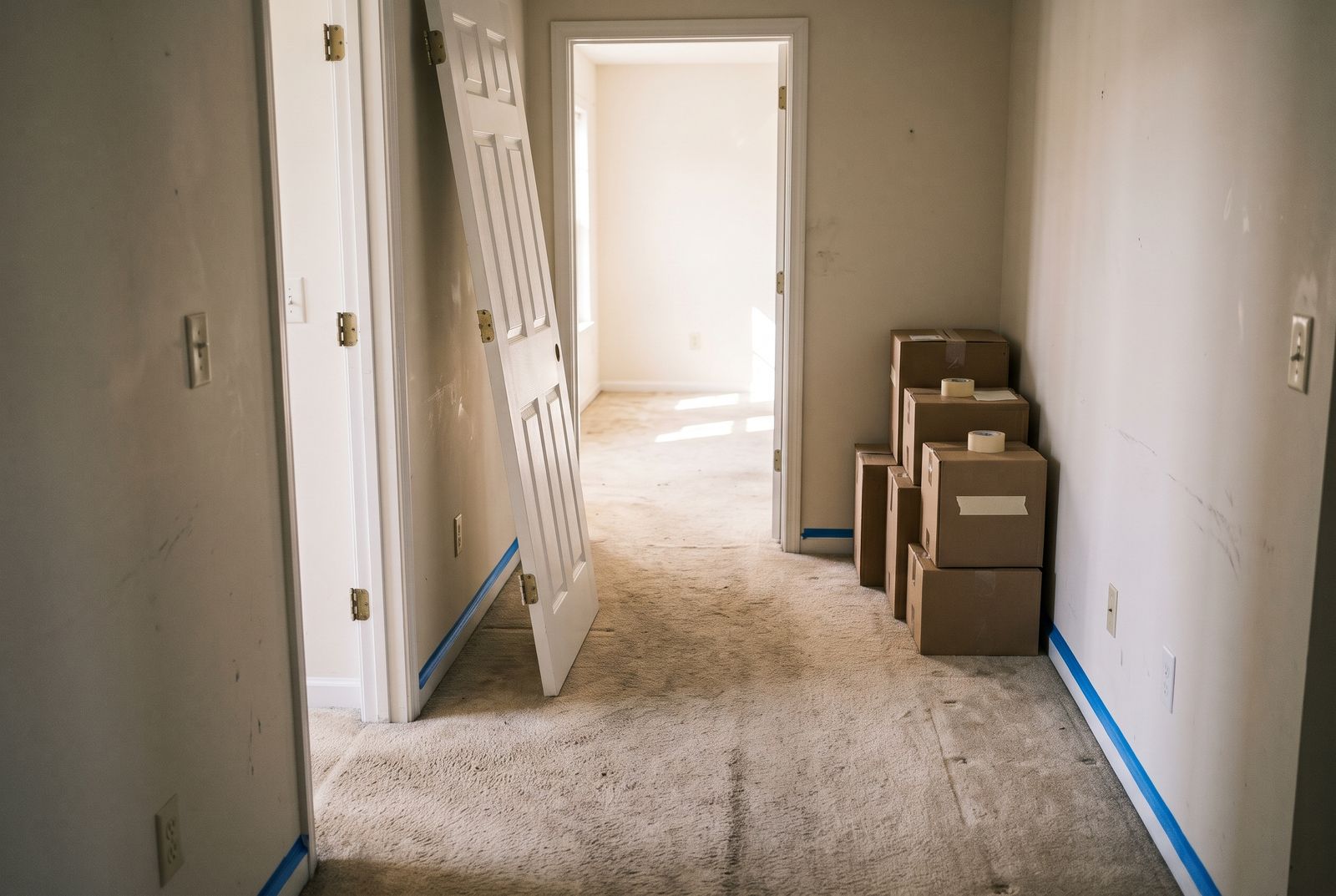
Preparing for replacement day
A two-week countdown so the crew walks into an empty, ready room.
Read the guide
Photos are illustrations, not specific projects.
Before you compare quotes
What Moves the Price
Two quotes for "the same" floor can differ a lot because one includes work the other leaves out. Material is only part of it. Labor, prep and what happens to the old floor often decide the total.
When quotes arrive, line them up against this list. If an item is missing, ask whether it is excluded, included, or simply not needed in your house. The measuring guide helps you check the square footage they used.
Line items worth asking about
- Measured area plus wasteroll width, pattern
- Stairsusually per step
- Moving furnitureincluded or not?
- Tear-out of the old floorcarpet, pad, tack strip
- Haul-away and disposalwhere it goes
- Subfloor repair or levelingfound or assumed
- Pad or underlayment gradethickness, density
- Transitions and thresholdseach doorway
- Door trimmingif the floor gets taller
No prices here on purpose: they vary by product, house and season, even within metro Atlanta. Use the list to make quotes comparable.
From form to floor
How a Quote Request Works
Four steps from the first message to an empty, ready room. You stay in charge of every decision.
-
01
You send the basics
Rooms, rough size, the floor you have now and what you are leaning toward. Rough numbers are fine; the form explains what helps most.
-
02
We reply by email
With questions, next steps, and whether your area and project are a fit. Nothing on this site commits you to anything.
-
03
Measure and confirm
Exact measurements and product choices come before any final number, so the quote matches the rooms you actually have.
-
04
Prep and replacement day
The prep countdown covers your side: clearing rooms, pets, parking and air, so the crew walks into a ready room.
Common questions
Short Answers First
Each answer points to the guide that covers it properly.
How do I know if my carpet needs replacing and not just a deep clean?
Cleaning removes soil. It cannot rebuild crushed pile, re-bond backing that has separated, or remove odor that has soaked into the pad and subfloor. If traffic lanes stay matted after a hot water extraction, if the carpet ripples again after it was re-stretched, or if smells return a few days after cleaning, the problem is below the surface. Our replace-or-keep check walks through each sign.
Will hard flooring help when I sell?
It depends on the market and the room. Hard surfaces in kitchens, entries and main living areas are widely expected; carpet in bedrooms is still common and many buyers want it there. A local listing agent can tell you what sells near you. The room by room comparison covers the practical trade-offs.
Can new carpet go over the old pad?
It is rarely a good idea. An old pad has already compressed, it holds whatever soaked into it, and many carpet makers spell out pad thickness and density requirements in their warranty terms. Read those terms before agreeing to reuse anything.
What happens to the old carpet?
Most old carpet in the United States still goes to landfill, but recycling and reuse options exist in some areas. What is possible depends on the fiber, how clean and dry it is, and who collects in your region. The removal and disposal guide explains what to ask.
How long does replacement day take?
A single bedroom of carpet is often finished within a working day, including tear-out. Whole floors, stairs, subfloor repairs and hard flooring that needs leveling or acclimation take longer. Ask the installer for the expected start and finish and what they need from you beforehand. The prep countdown covers your side.
Do you cover my area?
The Carpet Exchange is based in Atlanta, Georgia. Send your city or ZIP code through the project form and you will get a reply about whether your area and project are a fit.
Ready when you are
Tell Us the Rooms
List the rooms, the floor you have now, what you are leaning toward and your timing. Rough numbers are fine; the form explains what helps most.