
What is under the carpet
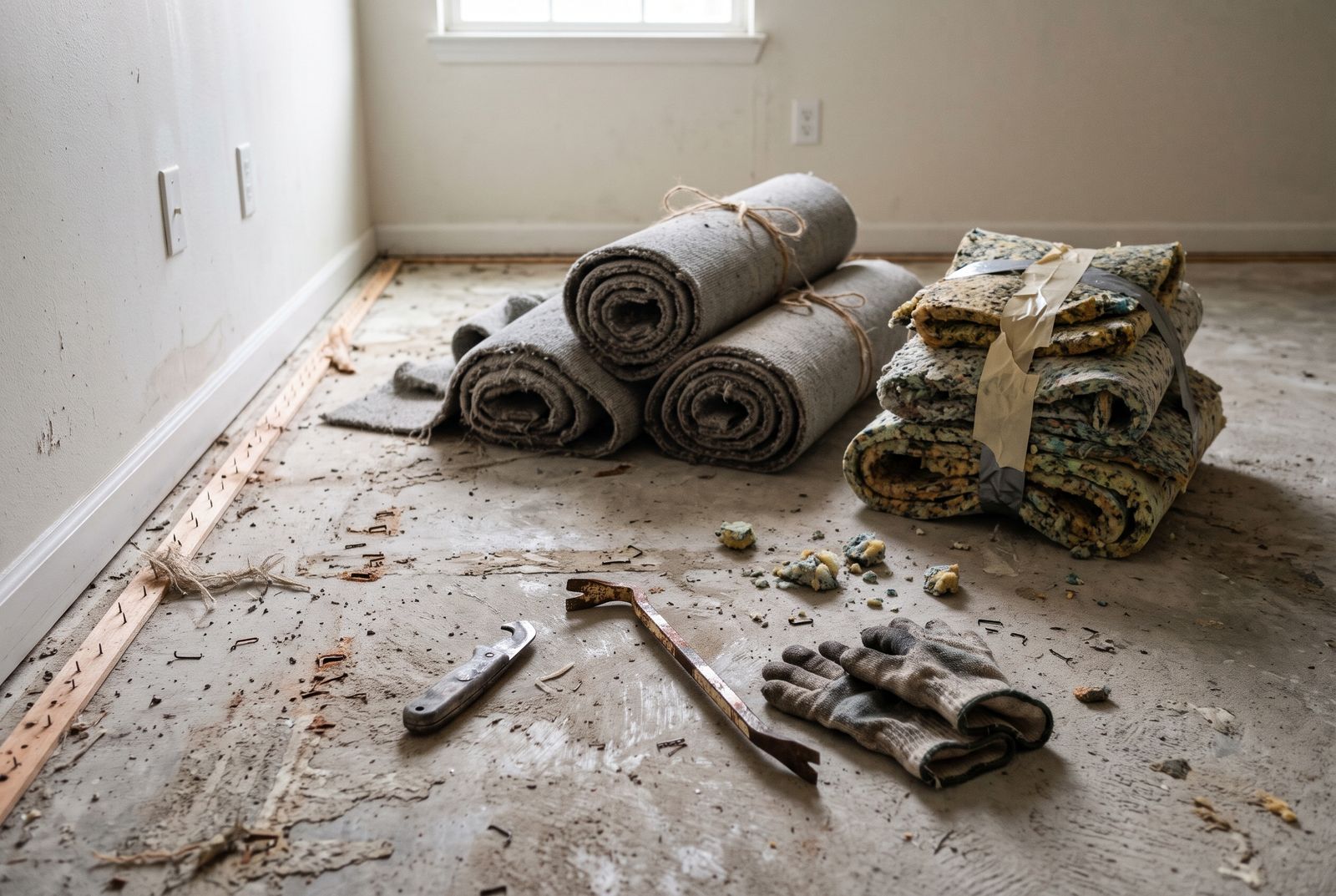
Stretched-in carpet, the most common kind in homes, is a sandwich. On top is the carpet itself. Under it is a separate pad, usually stapled to a wood subfloor or glued to concrete. Around the edge of the room runs tack strip: thin wood strips with angled pins that grip the carpet backing and hold it tight. Pull back a corner in a closet and you will see all three.
Some carpet, especially in basements and commercial-style rooms, is glued directly to concrete with no pad. That comes up very differently, as you will see below.
Carpet is sometimes laid over older sheet vinyl or floor tiles. Some older resilient flooring and the black adhesive used with it can contain asbestos. Intact material is generally not a hazard; scraping, sanding or breaking it can release fibers. If you find old tile or sheet flooring under carpet in a house built decades ago, have it tested before disturbing it, and follow your state's rules for removal.
Disposal route finder
Two questions. The answer is a starting point; your city's rules decide the rest.
Tear-out, step by step
If you are removing stretched-in carpet yourself to save on labor, or just want to know what the crew will be doing, this is the sequence:
- Clear and protect. Empty the room, take doors off their hinges if they swing over the carpet, and open windows. Old carpet releases a lot of dust.
- Gear up. Heavy gloves (tack strip pins are sharp), knee pads, eye protection and a dust mask. A utility knife with fresh blades, pliers, a pry bar and a flat scraper do most of the work.
- Free a corner. Grab the carpet at a corner with pliers and pull it up off the tack strip, then work along the walls.
- Cut into strips. Fold the carpet back on itself and cut from the back in strips about 3 feet wide. Roll each strip tightly and tape or tie it. Full-width rolls are too heavy to carry safely.
- Lift the pad. Pad usually tears away from its staples. Roll it separately; it is a different material and may have a different destination.
- Pull every staple. Pliers or a staple puller. Any staple left behind shows through a thin hard floor.
- Decide on the tack strip. For a hard floor, pry it all out, working carefully near baseboards. For new carpet, leave it for the installer to judge.
- Sweep, vacuum and look. With the floor bare, check for soft spots, water stains, squeaks and damage. This is the moment to fix the subfloor.
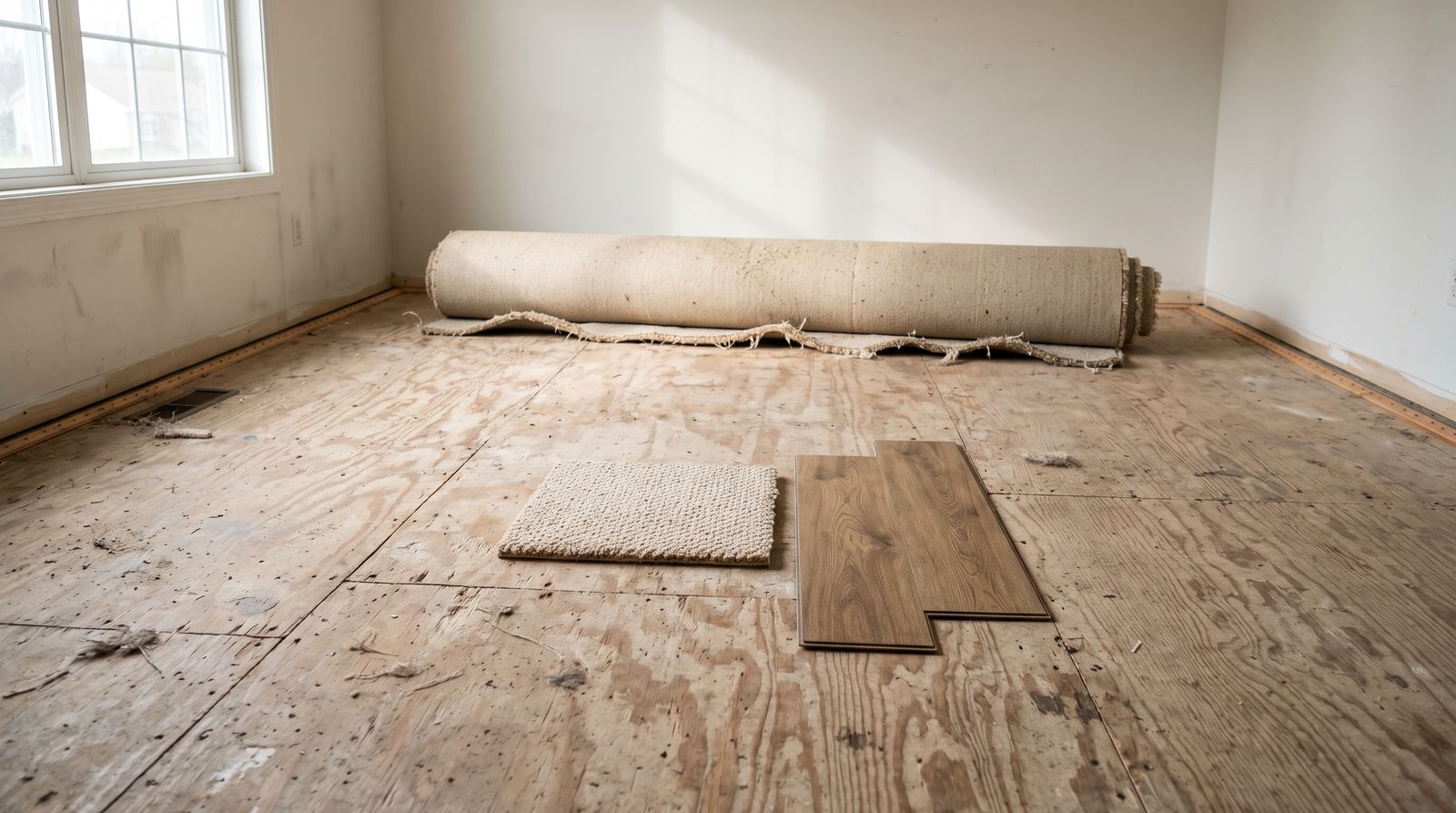
With the carpet up, a slab or subfloor shows things nobody has seen in years. On a slab, look for dark damp patches, white powdery deposits (a sign of moisture moving through the concrete) and cracks. Georgia has heavy subterranean termite pressure, so pencil-width mud tubes along the slab edge, at cracks or on the tack strip are worth a call to a pest professional before the new floor covers them again. Over a crawlspace, soft or stained plywood near bathrooms, exterior doors and the kitchen sink points to moisture worth tracing from below.
Where old carpet goes
There are four common routes, and they are not exclusive. A single job can send pad one way and carpet another.
| Route | How it works | Watch for |
|---|---|---|
| Installer haul-away | The crew takes the old floor when they leave. | Whether it is included in the quote, and where it ends up. |
| Curbside bulky pickup | Your city or hauler collects it with bulky items. | Limits on roll length, weight and quantity; scheduling ahead. |
| Drop-off at a transfer station or landfill | You load it and pay a fee by weight or volume. | A truck or trailer, and a dry day. Carpet left out in an Atlanta summer thunderstorm soaks up water and weighs much more. |
| Dumpster rental | A container sits at the house for days. | Size, permit rules for street placement, and banned items. |
Recycling, honestly
Most old carpet in the United States still ends up in landfill. That is not because nobody cares; carpet is genuinely awkward to recycle. A single piece combines face fiber, a woven backing, and latex or other adhesives, and those have to be separated before any of them can be reused. Dirt and moisture make it harder.
A few things improve the odds:
- Fiber type. Nylon face fiber has the most established recycling routes, and some nylon can be broken down chemically and made into new fiber. Polyester and polypropylene carpet have fewer outlets.
- Pad is easier. Much of the rebond pad sold today is itself made from recycled foam scrap, and clean, dry used pad is often welcome back at foam recyclers.
- Keep it dry and separated. Rolled carpet and rolled pad kept apart, dry and free of trash and tack strip, is what any collector wants.
- Where you live. California has a carpet stewardship law that funds collection and recycling through a fee on new carpet sales, run by the industry group Carpet America Recovery Effort (CARE). Elsewhere, options depend on local haulers and collectors.
In metro Atlanta, as anywhere, your city or county solid waste department is the best first call: they know which facilities nearby accept carpet or pad. Ask the installer too; some crews already separate materials for collectors.
Questions to ask the installer about the old floor
- Is tear-out included, and does that cover pad, tack strip and staples?Get it in writing, especially for glued-down areas.
- Do you haul it away, and where does it go?Landfill, recycler, or a mix.
- What happens if you find subfloor damage?Agree how repairs are approved and priced.
- Do you move furniture, and what about the stairs?Know what you need to clear beforehand.
Once the removal plan is settled, work through the replacement day countdown so the room is ready when the crew arrives.
Questions about removal and disposal
Can I remove old carpet myself?
Yes, for most stretched-in carpet over pad it is heavy, dusty work rather than skilled work. Cut it into strips, roll and tape them, then lift the pad and pull staples. Glued-down carpet on concrete, and anything over old flooring that might contain asbestos, are different jobs and worth leaving to professionals.
Is old carpet recyclable?
Some of it, in some places. Carpet is a mix of face fiber, backing and adhesive, which makes it harder to recycle than a single material. Nylon face fiber has the most established recycling routes. Clean, dry pad is often easier to place than the carpet itself. Availability depends heavily on where you live.
Should the tack strip come out?
If a hard floor is going in, yes, all of it, along with every staple. If new carpet is going in, the installer decides: tack strip in good condition is sometimes reused, while rusty, loose or damaged strip is replaced.
Will the city pick up old carpet at the curb?
Many cities and haulers accept carpet as bulky waste, usually with rules on how it is cut, rolled, tied and how much can go out at once. Metro Atlanta covers many separate cities and counties, and the City of Atlanta itself spans more than one county, so check the rules for your exact address with your city or county solid waste department before putting it out.