
The houses and their era
North of Buckhead and around the top of the Perimeter, much of the older housing was built from the 1950s through the 1970s. Brookhaven and Chamblee have many brick ranches on modest lots. Dunwoody grew quickly through the late 1960s and 1970s with two-story colonials and split-levels. Sandy Springs and Tucker have a mix of both. In all of them, newer houses have replaced some originals, so a street can hold a 1958 ranch next to a new build.
That mix matters because the floor plan and the decade decide what you find when the carpet comes up. A new house next door tells you little about yours.
Oak strip in the bedrooms
Many ranches from this period were built with narrow oak strip floors throughout the main living level. Later owners covered them with wall-to-wall carpet, often in the 1970s and 1980s. Pull back a closet corner: if you see tongue-and-groove oak, you may have a floor that only needs sanding and finishing. Compared with the old heart pine in prewar intown houses, mid-century oak was usually installed new over a plank or plywood subfloor and is more uniform, so refinishing is often more predictable.
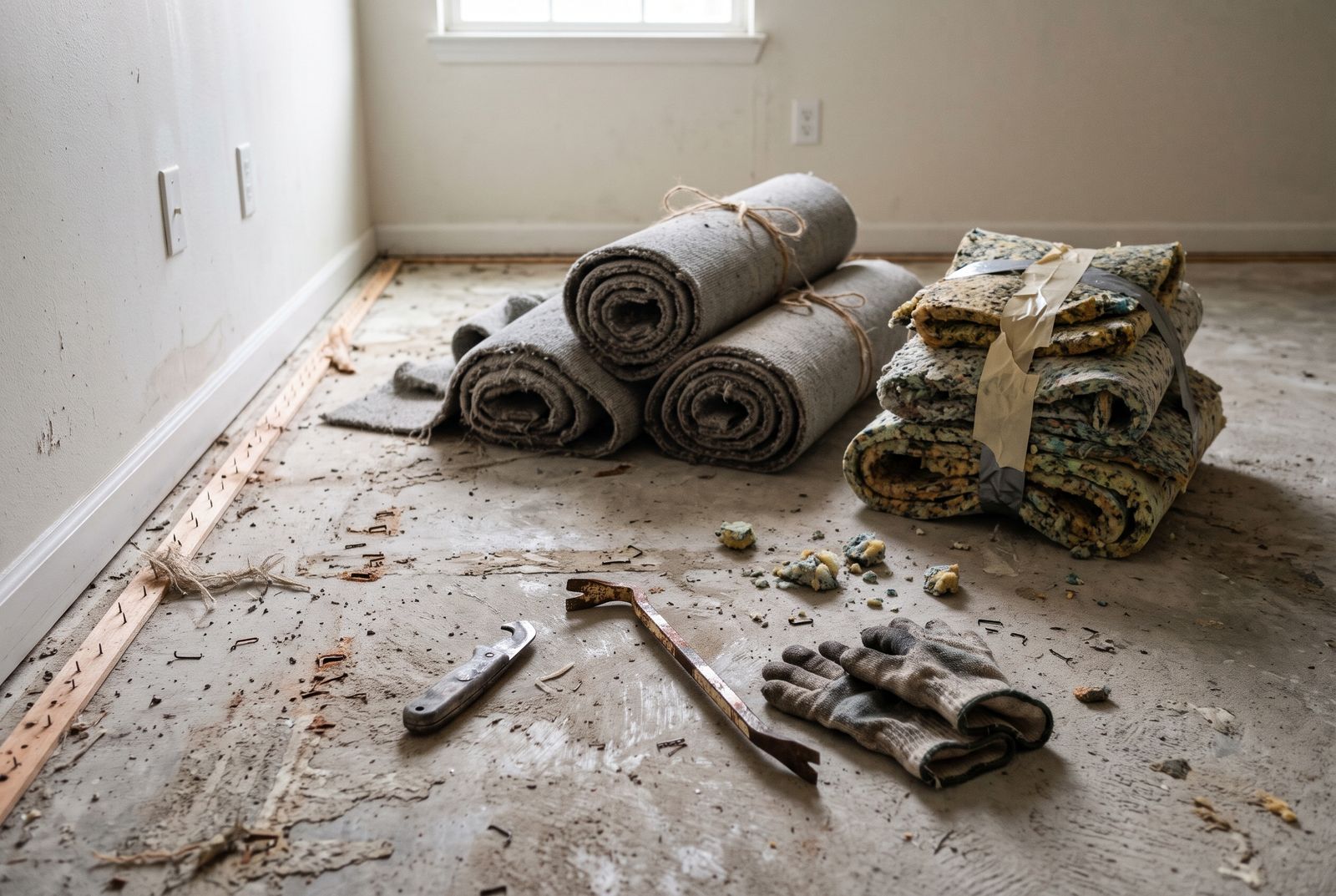
Expect the usual carpet scars: tack strip holes around the walls, stapled pad marks and dark patches where pets had accidents. Pet urine that soaked into oak for years turns the wood black and generally cannot be sanded out, so those boards get replaced. The signs guide explains how to check the pad for that kind of damage before you start.
Old tile and black adhesive
Kitchens, baths, dens and basements in houses of this age often had resilient floor tile, frequently in 9 by 9 inch squares, set in a black adhesive. Carpet or newer vinyl was sometimes laid right over it. Some tiles and adhesives from that era contain asbestos. Intact material that is left alone is generally not considered a hazard; sanding, grinding or breaking it up is where the risk comes from.
If you find small square tiles or black adhesive under carpet or sheet vinyl, stop and test before anyone scrapes it. If it tests positive, the choices are to cover it with a new floor or have it removed by a licensed abatement contractor. The removal guide covers what else turns up under old carpet.
Split-levels and short stair runs
A split-level puts a short flight of six or eight steps between each level. That gives you three or four small stairs instead of one long one, and each is a place where flooring choices meet. If the main level goes to hardwood or vinyl plank and the bedrooms stay carpeted, decide where the change happens: at the top of the stair, at the bottom, or on the stair itself. Hard treads need a proper nose piece on every step, which adds labor across several short runs. The stair measuring section shows how to count them.
The lower den on a slab
The lowest level of a split-level, often a den with a fireplace and a door to the yard, is usually a concrete slab partly below the ground. It runs cooler and damper than the rest of the house. Carpet laid directly on that slab decades ago often smells musty by now. Before choosing a replacement, test the slab for moisture. Waterproof vinyl plank or tile handle it best; if you want carpet for warmth, choose a synthetic fiber and a pad meant for concrete.
Additions and mixed subfloors
Few houses here are still in their original footprint. Sunrooms, enclosed carports and rear additions were built later, often with a plywood or slab floor at a slightly different height from the original oak. Plan transitions where those rooms meet, and expect one flooring product to need different prep in different rooms.
Questions
How do I know if old floor tile contains asbestos?
You cannot tell by looking. Resilient tiles and the black adhesive used in many homes built before the 1980s sometimes contain asbestos, and the only way to know is to have a sample tested by an accredited lab. Until then, do not sand, grind, scrape or break the tile.
Can new flooring go over old vinyl tile?
Often it can, which is one reason people choose it. A floating floor or new underlayment over intact, well-bonded tile leaves the old material undisturbed. The floor will sit a little higher, so check door clearances and transitions, and follow the new floor maker's rules for what it may be installed over.